
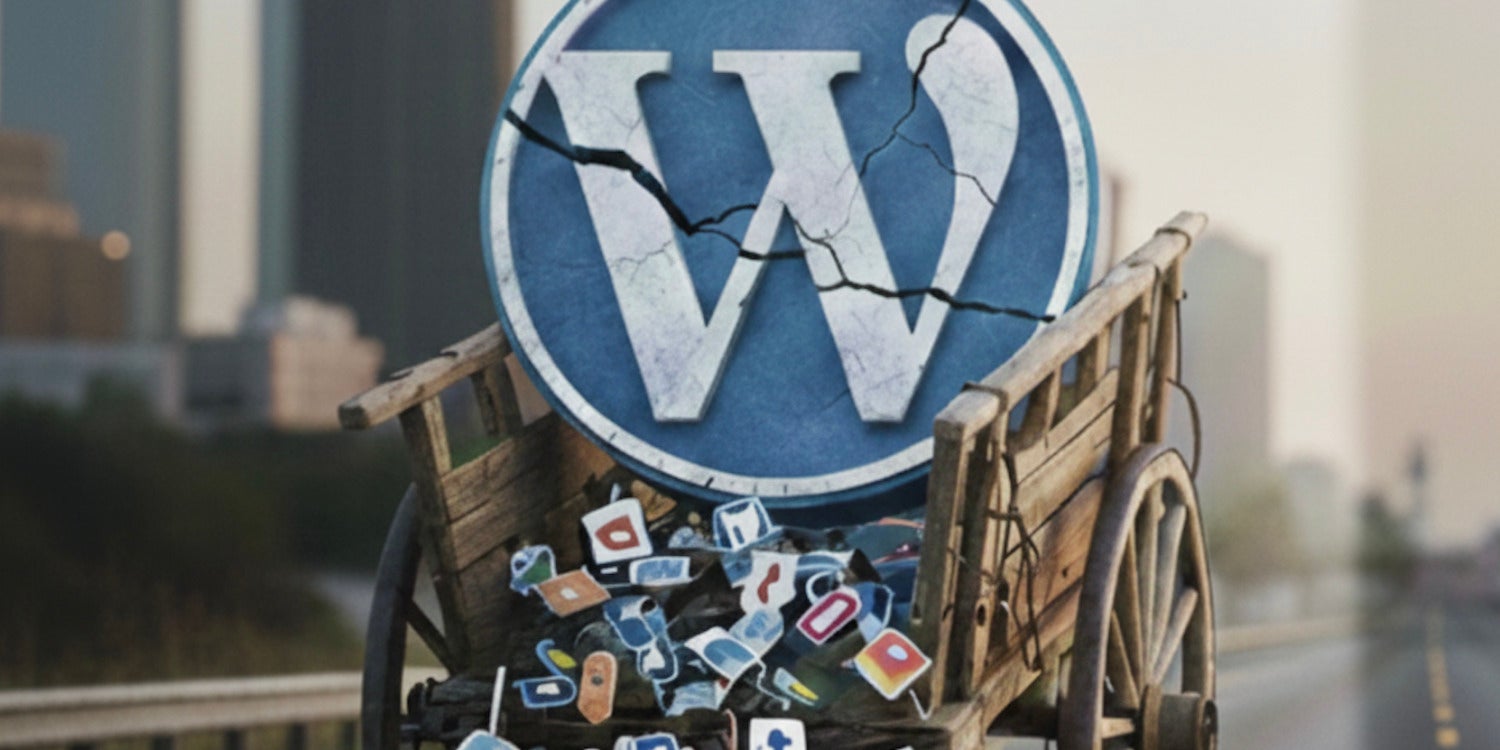
Moving Beyond Plugins to Enterprise-Grade Scalability
The Gutenberg Trap: Why Franchises Are Outgrowing the World’s Favorite Blog
In the early 2000s, WordPress revolutionized the internet by democratizing the "Post." It turned the complex task of web publishing into something as simple as writing a letter. For nearly two decades, its "Gutenberg" logic—the idea of the web as a series of stacked articles—has reigned supreme.
But for the modern franchise, the web is no longer a digital brochure; it is a complex logistics hub. When a multi-location business attempts to manage real-time inventory, local lead routing, and brand consistency across hundreds of nodes using a publishing tool, they encounter the "Square Peg, Round Hole" dilemma. They are, in effect, trying to run a high-frequency trading desk on a typewriter.
While WordPress is a triumph of content, it is a failure of architecture for the enterprise. Here is why the "plugin" culture is costing franchises their competitive edge—and why the future belongs to the API.
1. The Fragility of the "Plugin" Patchwork
In the WordPress ecosystem, functionality is not built; it is bolted on. To make a blog behave like a franchise portal, developers must lean on third-party plugins. This creates a "house of cards" infrastructure that is professionally precarious.
-
Performance Latency: Every added plugin acts as a "tax" on load speed. In the franchise world, a one-second delay in a location search isn't just a minor annoyance; it is a direct hit to the conversion rate.
-
The "Plugin Domino Effect": WordPress environments are notoriously unstable. An update to a simple contact form can inadvertently break the "Book Now" functionality across 500 franchise locations simultaneously.
-
Security Vulnerabilities: As the world’s most popular CMS, WordPress is a permanent target. Relying on third-party code for core business logic means a single security hole in a minor plugin can expose the sensitive data of an entire national network.
-
SEO "Cannibalization": Managing local SEO for hundreds of sub-pages requires heavy, specialized plugins that often struggle with duplicate content. This frequently results in "cannibalization," where your own locations compete against each other in Google rankings.
2. The Rise of the "Headless" Application
Forward-thinking franchises are migrating toward "Headless" architecture—using modern frameworks like Vue or React powered by the Gorilla Dash API. This shifts the website from a collection of static pages to a high-performance Web Application.
-
Atomic Performance: Unlike WordPress, which loads an entire page's worth of "bloat," React and Vue fetch only the specific data requested. A user searching for a local franchise gets a lightning-fast, app-like experience.
-
Total Brand Lockdown: In a custom build, the brand guidelines are "hard-coded" into the components. This prevents a well-meaning local franchisee from accidentally changing fonts or colors, ensuring absolute brand equity across the network.
-
Clean Data Architecture: By using the Gorilla Dash API, the website becomes a "thin client." All heavy lifting—logistics, lead routing, and data management—happens in the cloud. The front end remains light, nimble, and easy to maintain.
-
Future-Proofing: Because the system is API-driven, the logic you build today is "platform agnostic." If you launch a mobile app or an in-store kiosk tomorrow, you plug into the same Gorilla Dash data source. You are no longer trapped in a single ecosystem.
3. The Economist’s View: Total Cost of Ownership
While a WordPress template may appear cheaper on day one, the Total Cost of Ownership (TCO) tells a different story. The hidden costs of WordPress—constant maintenance, security patches, and the loss of revenue due to slow performance—quickly eclipse the initial investment of a custom build.
-
Lower Maintenance: You move away from the "update and pray" cycle of plugin management.
-
Scalability: Adding your 100th or 1,000th location is as seamless as adding your second. There is no performance degradation as your database grows.
-
Higher Conversion: A site that functions like a high-end application builds trust and captures leads that a sluggish blog-style site simply loses.
The Verdict
WordPress remains an excellent tool for a local bakery or a personal journal. But for a franchise network with national ambitions, it lacks the structural integrity required for the modern era. To compete today, a business must stop building on a publishing platform and start building on an enterprise-grade application framework.
Disclaimer:
If any facts in our articles are incorrect or you would like an article removed please email us at news@gorilladash.com.