
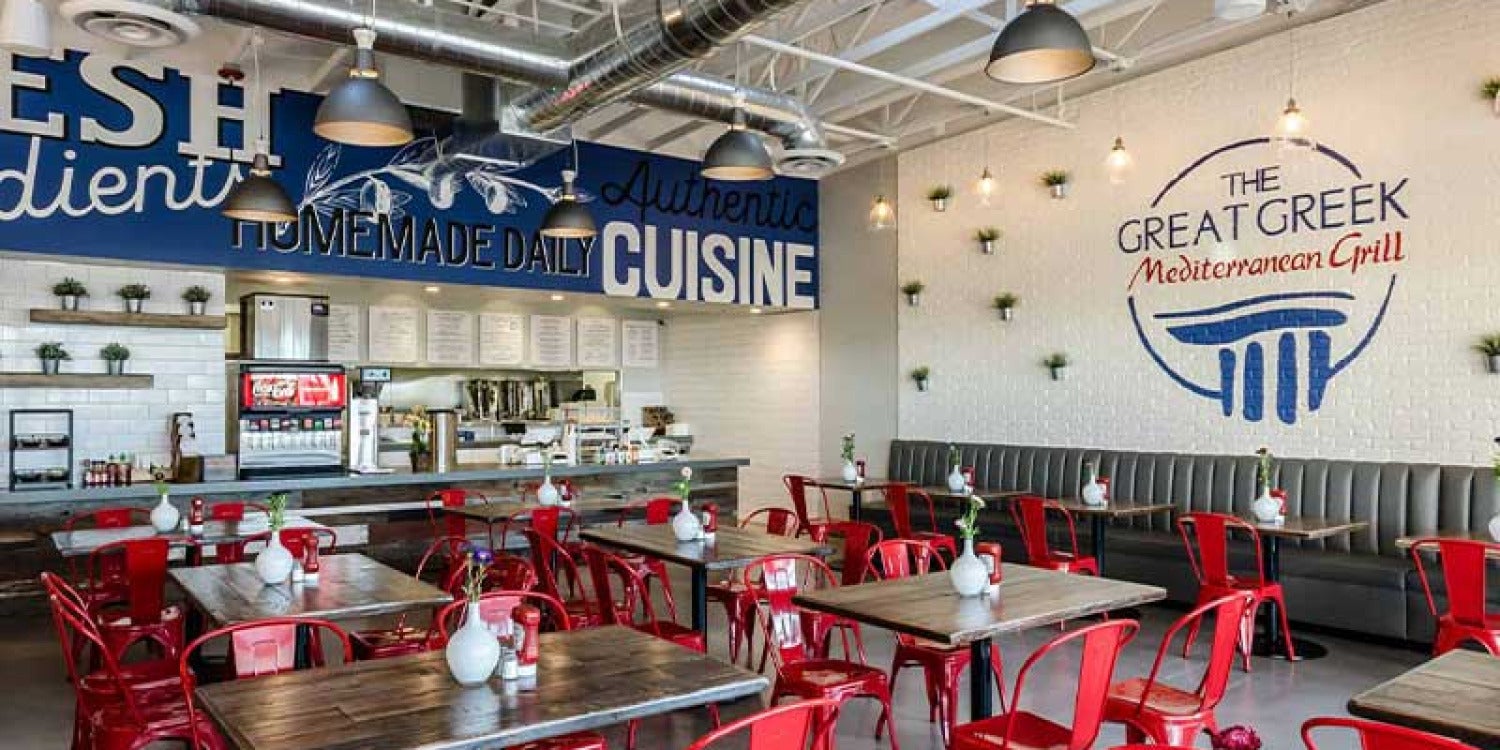
The Great Greek Mediterranean Grill is preparing to enter the Caribbean market after signing a master franchise agreement with the Beharry Group, one of Guyana’s largest and most established business organizations. The partnership will introduce the fast casual restaurant brand to Guyana and seven additional Caribbean markets, marking the company’s first major expansion into the region.
The expansion will begin with a flagship location in Georgetown later this year, with additional development planned across nearby territories including the Bahamas and Antigua. The Great Greek, known for its Mediterranean-inspired menu of grilled proteins, fresh vegetables, and house-made sauces, is positioning itself as a differentiated offering within a Caribbean dining market historically dominated by traditional quick service concepts.
Suresh Beharry, who leads the Beharry Group, said interest in the brand grew after experiencing the concept firsthand in South Florida. The company already operates established franchise businesses tied to KFC and Pizza Hut, giving it significant operational experience within multi-unit restaurant management. Beharry said the partnership represents an opportunity to introduce a healthier and more contemporary fast casual option to Caribbean consumers.
Bob Andersen, president of The Great Greek Mediterranean Grill, described the agreement as an important milestone in the company’s international growth strategy. He pointed to the Beharry Group’s regional market knowledge and franchise operating experience as key advantages for long-term expansion. Industry observers note that regional franchise partnerships are increasingly shaping how emerging restaurant concepts expand into new territories while balancing localization with brand consistency.
As franchise systems expand across multiple countries and territories, maintaining operational consistency becomes increasingly important. In that environment, platforms comparable to Gorilla Dash Knowledge Base can help franchise organizations centralize training materials, operational guidance, and brand standards across distributed markets. For growing restaurant networks entering unfamiliar regions, structured knowledge management systems are becoming a larger part of scalable international expansion strategies.


